We're down for the RUMvision 2.0 upgrade. Data collection continues. Back tomorrow!

Blog

  • 9 quick wins in UX and pagespeed for BF/CM

    • Published
    • Readingtime ± 7 minutes

    Black Friday is just around the corner! What can you do to make sure your users experience is optimal? Allow us to share 9 quick-wins to make sure you do not miss out on conversions or brand loyalty in the long run. Almost no coding required!


  • Ciao Rome! Meet Magento Italy 2025 slides

    • Published
    • Readingtime ± 1 minute

    All roads lead to Rome, but it was our first time giving a talk in Italy. And it was a great succes! Want to find the slides, read about our Baseline integration, the Zitmaxx use case or how to improve webperformance for Hyvä, you find al the resources here.

  • Interop 2026: Key APIs for sitespeed & RUM

    • Published
    • Readingtime ± 5 minutes

    At RUMvision, our focus is helping site owners make their sites faster. To do that well, we depend on the data browsers give us through APIs. Some of those APIs are already incredibly useful — but not all browsers support them consistently.

  • Improving Core Web Vitals for your Hyvä Magento shop: the ultimate SUX guide

    • Published
    • Readingtime ± 18 minutes

    "Your site is slow" – four words no Hyvä developer wants to hear, yet only 51% of Hyvä shops achieve good Core Web Vitals scores. After years of optimizing Magento performance, we've identified the common issues preventing stores from reaching their full potential. In this guide, we'll explain not just what to fix, but why things fail in the first place. Your journey to better Core Web Vitals – and happier customers – starts here.

  • Time to unload your unload events

    • Published
    • Readingtime ± 5 minutes

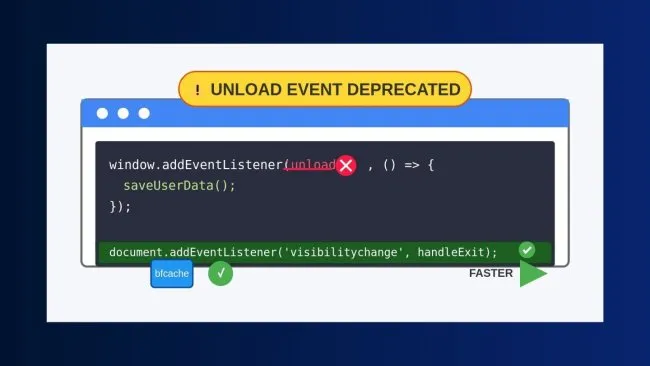
    If you're still depending on unload events in your code, you need to act NOW. Chrome is starting to kill these handlers this month, potentially breaking your website's analytics and data-saving features. These events were never reliable on mobile, Safari already ignores them, and soon desktop Chrome will too. Here's why moving to better alternatives won't just save your code—it'll actually improve your site's performance.

  • Core Web Vitals and SEO - are they a ranking factor or not? [updated november 2025+ FAQ]

    • Published
    • Readingtime ± 6 minutes

    Core Web Vitals and SEO – it's a hotly debated topic that often leaves business owners and SEO professionals wondering where to focus their efforts. Some claim it's the key to ranking success, while others argue it's just another optimization rabbit hole. Let's cut through the noise and focus on what actually matters for your business in 2024 and beyond

  • Srsltid impacting Core Web Vitals via TTFB caching

    • Published
    • Readingtime ± 2 minutes

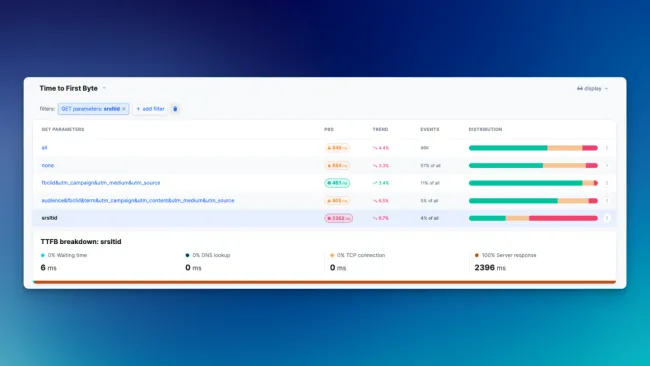
    The srsltid auto-tracking parameter already caused SEO havoc amongst site owners using Google Merchant Center. But issues aren't stopping there.

  • Largest Contentful Paint failed? The ultimate 2024 checklist to fix it

    • Published
    • Readingtime ± 10 minutes

    Are your Core Web Vitals failing due to a LCP over 2.5s? Let's fix it! The Largest Contentful Paint (LCP) is one of the most important metrics in measuring web performance - more specifically - it's the one that measures loading speed. While absolutely vital for UX and conversions, still 40% of world wide sites fail at passing this metric. Let's deepdive in understanding and improving the LCP and get those numbers up!

  • Understanding the difference between Lighthouse, Core Web Vitals and RUM data

    • Published
    • Readingtime ± 8 minutes

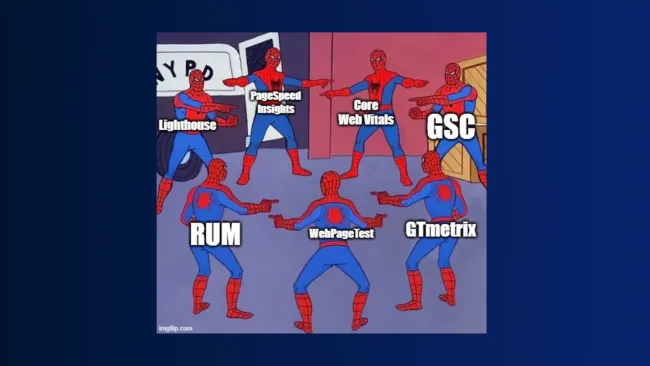
    There are numerous solutions for measuring Core Web Vitals. But how do you select the right one? Learn about the differences between lab data tools like Lighthouse, field data tools like Pagespeed Insights, and real-time user monitoring like RUMvision.

  • Double score! RUMvision got featured twice on Google IO 2024!

    • Published
    • Readingtime ± 1 minute

    We're still buzzing after yesterday's incredible events at Google I/O! It was a double Dutch delight for RUMvision, as both our upcoming integration with Google Baseline and our work on INP measurement were featured at Google's biggest event of the year.

  • Compare your competitors Core Web Vitals

    • Published
    • Readingtime ± 3 minutes

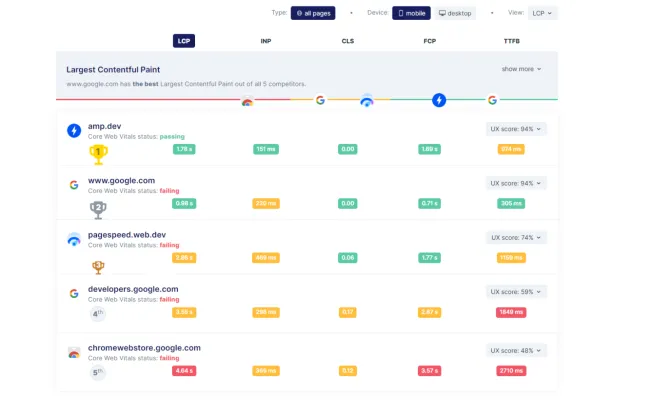
    New free tool alert! You can now compare multiple websites Core Web Vitals with each other, for free! We made a nice start by comparing some different industries.

  • Web Performance Experts Guide to Mastering Interaction to Next Paint (INP)

    • Published
    • Readingtime ± 39 minutes

    It’s March 12th, 2024, a big day in the web performance community! Today we see Interaction to Next Paint take its (rightful) place in the Core Web Vitals, replacing First Input Delay (FID) as the primary metric for measuring website responsiveness and interactivity. This comprehensive guide, which includes insights from 13 web performance specialists, will provide you with the knowledge and practical advice you need to master INP.

  • INP replacing FID, FID to be removed from Google tools

    • Published
    • Readingtime ± 2 minutes

    We have an INP date. And this doesn't only mean that FID stops being a Core Web Vital metric. FID is facing more consequences and will never be the same again. Here's what to expect.

  • Shopify launches Core Web Vitals dashboard for Liquid shops

    • Published
    • Readingtime ± 3 minutes

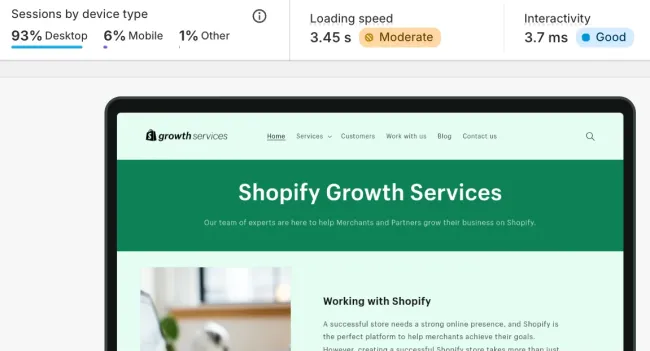
    By saying "Goodbye speed scores; Hello real users," Shopify is getting rid of the single Lighthouse score and switching to RUM data from real users. We can only applaud this choice. For Shopify merchants, who is eligible and what information will you still be missing?

  • Why using a single pagespeed score is a money-leaking approach

    • Published
    • Readingtime ± 2 minutes

    Pagespeed is more nuanced than a single number. Google's Core Web Vitals containing 3 metrics is perfectly illustrating this. In this blogpost, I will try to describe why it is important to look beyond a single score.

  • How our UX pagespeed score of your real users is calculated

    • Published
    • Readingtime ± 8 minutes

    Everyone prefers to have a single score so they can easily understand where they stand. In our niche, Lighthouse is the best example. So we copied that idea, but then based on pagespeed numbers of your real users.

  • Failed Core Web Vitals Assessment

    • Published
    • Readingtime ± 7 minutes

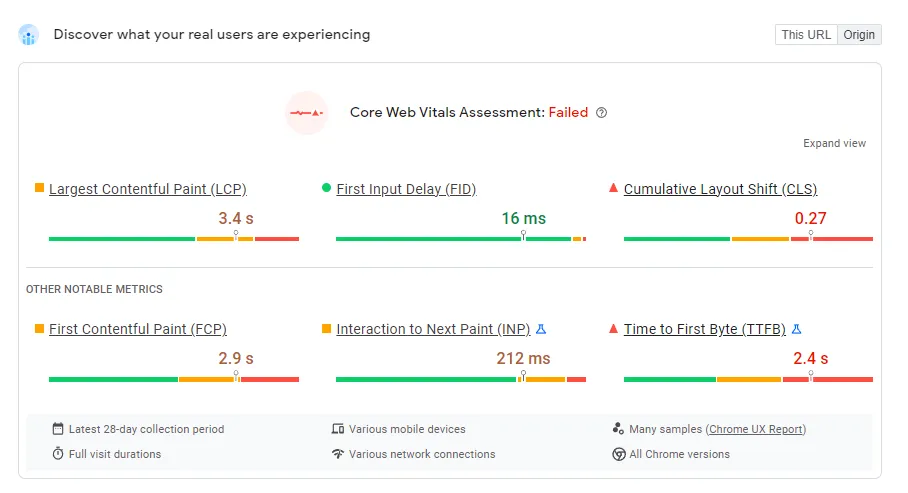
    You probably landed on this page after Pagespeed Insights told you that you have failed the Core Web Vitals assessment. And now you might be wondering why this is. In this article, we will discuss the possibilities and how you'll soon be able to pass on your Core Web Vitals.

  • Interaction to Next Paint (INP) - Core Web Vitals

    • Published
    • Readingtime ± 8 minutes

    Good news! The Interaction to Next Paint will replace the FID as a Core Web Vital per March 2024. Just like first input delay (FID), the Interaction to Next Paint puts focus on the responsiveness of the webpage. To understand how fast your page visually responds to user input, throughout the page's life cycle, Interaction to Next Paint records the latency of all interactions. The Interaction to Next Paint of the page is the highest value of those interactions - or a close approximation of the highest value for pages with many interactions.

  • Core Web Vitals Glossary : 100+ Terms & Abbrevations You Need To Know

    • Published
    • Readingtime ± 22 minutes

    Are you tired of feeling like you need a translator every time you read about Core Web Vitals? Don't worry, you're not alone! From FID to LCP, and everything in between, it can feel like you're decoding a secret message from a spy movie. But fear not, after this post you can join our secret club!

  • Understanding the Core Web Vitals thresholds

    • Published
    • Readingtime ± 5 minutes

    In recent years, the focus on web performance and user experience has increased significantly. Core Web Vitals are a set of metrics developed by Google to evaluate website performance and user experience. These metrics are key to improving your website's search engine rankings, which in turn leads to better visibility and higher traffic. In this article, we will dive deep into Core Web Vitals, their respective thresholds, and their impact on web performance and search engine optimization (SEO).

  • How A/B testing impacts your Core Web Vitals and pagespeed

    • Published
    • Readingtime ± 4 minutes

    A/B testing with anti-flicker or async-hiding snippets raises concerns about its impact on Core Web Vitals. This article examines the relationship between client-side A/B testing, Google Optimize, and performance metrics like First Contentful Paint, Largest Contentful Paint, and Time to First Byte. By understanding these connections, website owners and developers can optimize their testing strategies to enhance performance and user engagement.

  • New release - Introducing UX, FUX, and more!

    • Published
    • Readingtime ± 6 minutes

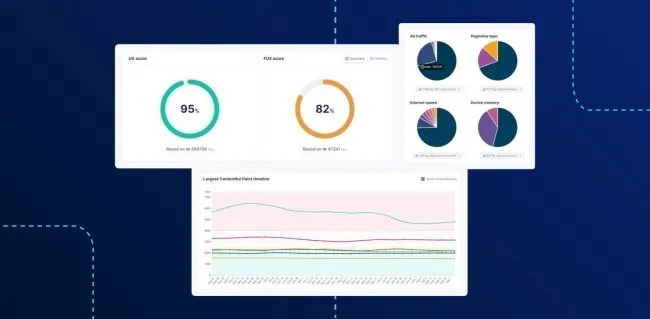
    We have some exciting news to share with you! After taking your suggestions and feedback into account, we've been hard at work developing a new release that we think you'll love. And it's live right now!

  • Proud announcement: a new free tool to visualize historic website performance

    • Published
    • Readingtime ± 2 minutes

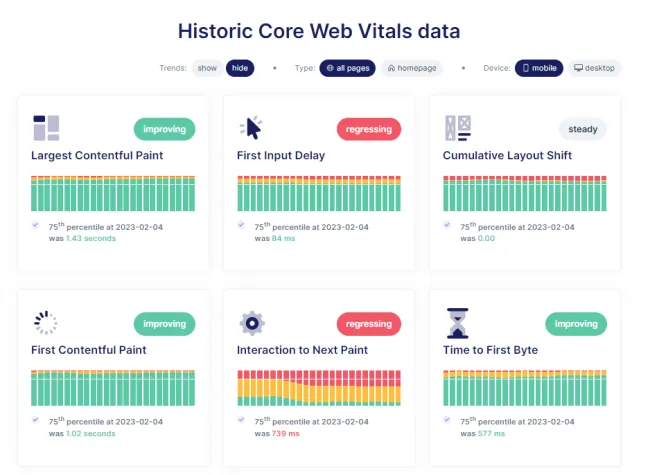
    Wow, a new Core Web Vitals tool in town? That sees the historical data of Core Web Vitals of your website (or your competitors)?!😉Yup, that's right! Google launched the new API (CrUX History API) and that's something to celebrate because now our extra 𝗳𝗿𝗲𝗲 tool can show you data for the last 6 months.

  • What is the Cumulative Layout Shift (CLS)?

    • Published
    • Readingtime ± 6 minutes

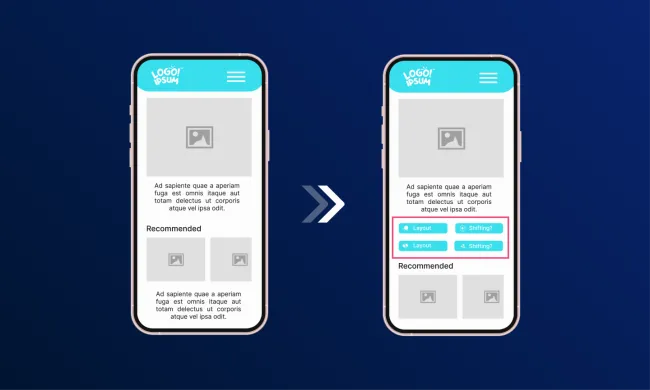
    Cumulative Layout Shift (CLS) is a critical Core Web Vital that measures user experience on websites. It measures the visual stability of a page, or in other words, how much the layout of a page changes while a user is trying to interact with it. A high CLS score can lead to a poor user experience and decreased conversions. In this blog, we will discuss the causes of CLS, best practices for reducing it, and tools for measuring and tracking CLS on your website.

  • Why you need a real user monitoring (RUM) tool

    • Published
    • Readingtime ± 4 minutes

    You've launched your website, and it's live. Now what? In order to keep improving your site's user experience, you need a tool that can give you insights into how real users are experiencing your site. This is where real user monitoring comes in—it's the practice of collecting data from actual visitors as opposed to synthetic visits or non-human agents like crawlers or bots.

  • How to measure Core Web Vitals?

    • Published
    • Readingtime ± 2 minutes

    There are several ways to measure your Core Web Vitals. But which one gives you the most reliable results and why? And which one is best for you?

  • How device capabilities might impact your site speed

    • Published
    • Readingtime ± 2 minutes

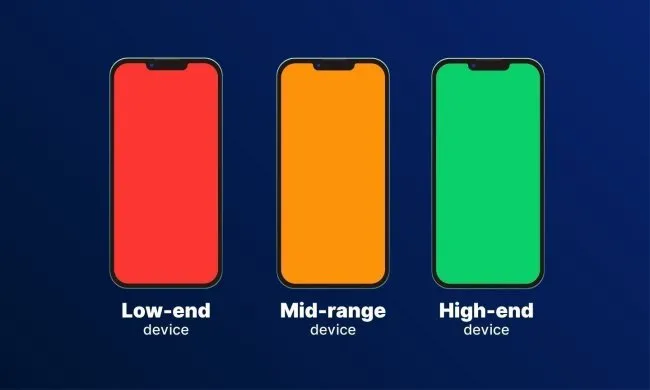
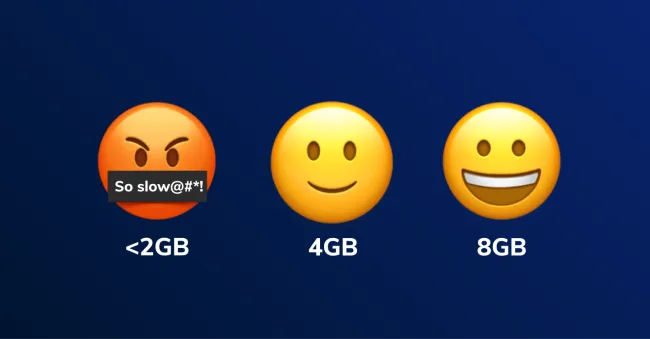
    That smartphones come in many types and price ranges we all know. But do you also know that this can have a lot of impact on your site speed and the user's experience?

  • How in-app browsers can impact your pagespeed

    • Published
    • Readingtime ± 1 minute

    We all know them, in-app browsers. Some people are happy to continue browsing in them, while others prefer to opt straight into their familiar browsers. Whether this is for privacy or pagespeed reasons.

  • How many pageviews do you need for pagespeed monitoring?

    • Published
    • Readingtime ± 1 minute

    We get this question quite a lot. And rightfully so. If you started monitoring, then you might be ahead of your competition already. But now you want to draw conclusions from recent deploys as well. But how many pageviews do you need?

  • 9 Optimization tips to pass Core Web Vitals assessment

    • Published
    • Readingtime ± 9 minutes

    You must receive a "good" score for each of the three Core Web Vitals based on field data, to pass the Core Web Vitals assessment. Get tips on how you can achieve this, and why you should.

  • 9 motives that led to creating RUMvision

    • Published
    • Readingtime ± 5 minutes

    We're here to chase pagespeed. We're not the only one though. We'll explain why we are taking the leap of introducing another pagespeed and RUM solution.

  • What Core Web Vitals brought us

    • Published
    • Readingtime ± 2 minutes

    Some think it's here to annoy SEO specialists and developers. But Google got pagespeed on the map by introducing Core Web VItals. And despite ongoing changes, that's a good thing.

  • Why your competitor is having better pagespeed than you

    • Published
    • Readingtime ± 3 minutes

    No shop is the same, even if they're running on the same platform. That's because no user let alone audience is the same. That's why it is difficult to compare pagespeed between two shops.

  • Is RUM data the same as field data?

    • Published
    • Readingtime ± 1 minute

    There is confusion among some people about the distinction between RUM data (Real User Monitoring) and field data. Google refers to field data, while we refer to it as RUM data.

  • Comparing e-commerce platforms with Google’s real UX data

    • Published
    • Readingtime ± 2 minutes

    We can use Google public data to somehow get an idea of the performance of platforms. For free. But there are challenges though when trying to do this. For example when a platform isn't just a website or webshop builder, but maybe both.